Bollywood began heavily utilizing the world-class action choreography, VFX studios, and technical crews native to Chennai and Hyderabad, raising the technical standard of Hindi action films. Key Drivers of the Unified Entertainment Landscape

Top Bollywood production houses stopped viewing Southern films merely as properties to remake. Instead, they began co-producing projects, investing capital directly into Southern directors, and managing the massive Hindi-language theatrical distribution for these collaborative entities.

Devika Rani was not "South Big" in the modern sense (she was born in Visakhapatnam but educated in London). However, her studio——was foundational. The crucial point often missed is that the technical rigor, set design, and disciplined production schedules of early Bollywood were heavily influenced by Southern pioneers like R. Nagendra Rao and the studios of Chennai (then Madras). Devika’s work bridged the genteel, literary north with the technically superior, music-driven south. Her legacy proves that the "south vs. north" war is a recent invention; for decades, they co-funded and cross-pollinated.

The rise of "Pan-Indian" films—movies shot simultaneously or dubbed in multiple languages to target the entire subcontinent—changed the economics of Indian cinema. Masterpieces like Baahubali , KGF , RRR , and Pushpa proved that North Indian audiences were eager for the larger-than-life storytelling, intense action, and deep-rooted cultural themes characteristic of South cinema. Shifting Audience Preferences

The global cinematic landscape is experiencing a massive paradigm shift, driven by the explosive convergence of South Indian cinema and Bollywood. Historically, the Indian film industry was viewed through a fragmented lens, with Mumbai-based Bollywood operating independently from the vibrant, culturally rich industries of the South (Telugu, Tamil, Kannada, and Malayalam). Today, that divide has completely dissolved. At the epicenter of this cinematic revolution is the concept of "South Big Devika Entertainment"—a symbolic and operational powerhouse reshaping how multi-lingual, high-budget pan-Indian cinema is produced, distributed, and consumed globally.

$$ \textGrowth Rate = \frac\textNew Value - \textOld Value\textOld Value \times 100 $$

No discussion of Indian cinema’s history is complete without Devika Rani. Born in 1908 in Waltair (now Visakhapatnam), she was a visionary who became the face of India’s first major film studio, , which she co-founded with her husband, Himanshu Rai. Her education in England and training in Germany at UFA Studios, the epicenter of European expressionist cinema, brought a global sensibility to her craft. Her 1933 film Karma featured a prolonged kissing scene that created a sensation. After Rai’s death, she took control of the studio, continuing to produce women-centric films that broke new ground. For her contributions, she was awarded the Padma Shri in 1958 and India’s highest film honor, the Dadasaheb Phalke Award , in 1969. Devika Rani’s legacy is not just as a glamorous star but as a powerhouse producer who helped shape the professional studio system in Hindi cinema.

Das könnte dich auch interessieren...

LaTuSch 2026

South Indian Big Boobs Aunty Devika With Hot Hubby Hardcore Romance In Desi Masala Movie Target Fixed Fixed Now

Bollywood began heavily utilizing the world-class action choreography, VFX studios, and technical crews native to Chennai and Hyderabad, raising the technical standard of Hindi action films. Key Drivers of the Unified Entertainment Landscape

Top Bollywood production houses stopped viewing Southern films merely as properties to remake. Instead, they began co-producing projects, investing capital directly into Southern directors, and managing the massive Hindi-language theatrical distribution for these collaborative entities. Devika Rani was not "South Big" in the

Devika Rani was not "South Big" in the modern sense (she was born in Visakhapatnam but educated in London). However, her studio——was foundational. The crucial point often missed is that the technical rigor, set design, and disciplined production schedules of early Bollywood were heavily influenced by Southern pioneers like R. Nagendra Rao and the studios of Chennai (then Madras). Devika’s work bridged the genteel, literary north with the technically superior, music-driven south. Her legacy proves that the "south vs. north" war is a recent invention; for decades, they co-funded and cross-pollinated. Nagendra Rao and the studios of Chennai (then Madras)

The rise of "Pan-Indian" films—movies shot simultaneously or dubbed in multiple languages to target the entire subcontinent—changed the economics of Indian cinema. Masterpieces like Baahubali , KGF , RRR , and Pushpa proved that North Indian audiences were eager for the larger-than-life storytelling, intense action, and deep-rooted cultural themes characteristic of South cinema. Shifting Audience Preferences For her contributions

The global cinematic landscape is experiencing a massive paradigm shift, driven by the explosive convergence of South Indian cinema and Bollywood. Historically, the Indian film industry was viewed through a fragmented lens, with Mumbai-based Bollywood operating independently from the vibrant, culturally rich industries of the South (Telugu, Tamil, Kannada, and Malayalam). Today, that divide has completely dissolved. At the epicenter of this cinematic revolution is the concept of "South Big Devika Entertainment"—a symbolic and operational powerhouse reshaping how multi-lingual, high-budget pan-Indian cinema is produced, distributed, and consumed globally.

$$ \textGrowth Rate = \frac\textNew Value - \textOld Value\textOld Value \times 100 $$

No discussion of Indian cinema’s history is complete without Devika Rani. Born in 1908 in Waltair (now Visakhapatnam), she was a visionary who became the face of India’s first major film studio, , which she co-founded with her husband, Himanshu Rai. Her education in England and training in Germany at UFA Studios, the epicenter of European expressionist cinema, brought a global sensibility to her craft. Her 1933 film Karma featured a prolonged kissing scene that created a sensation. After Rai’s death, she took control of the studio, continuing to produce women-centric films that broke new ground. For her contributions, she was awarded the Padma Shri in 1958 and India’s highest film honor, the Dadasaheb Phalke Award , in 1969. Devika Rani’s legacy is not just as a glamorous star but as a powerhouse producer who helped shape the professional studio system in Hindi cinema.
Jetzt anmelden: SPORTINSTRUKTORIN und SPORTINSTRUKTOR für FIT KINDER & JUGEND 2026/27

Kinder und Jugendliche für Bewegung begeistern ist deine Leidenschaft? Du möchtest Nachwuchs gezielt fördern und dich als Trainer:in professionell weiterentwickeln? Dann ist die Instruktor:innen-Ausbildung der Bundessportakademie Wien mit dem Schwerpunkt FIT KINDER & JUGEND genau das Richtige für dich! Die Ausbildung ist kostenlos! Anmeldeschluss: 14. Juni 2026.

Erste APU/Sportunion Übungsleiter:innen Ausbildung im Padel in Tirol

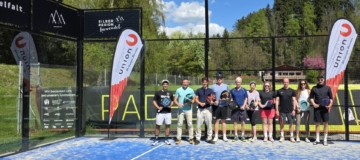
Padel in Tirol Insgesamt 10 Teilnehmer:innen nutzten die Gelegenheit, ihr Wissen und ihre praktischen Fähigkeiten gezielt zu erweitern bei der ersten Padelausbildung in Tirol. Durchgeführt von der Sportunion wurden die Fortbildungstage in Kooperation mit der Austrian Padelunion und Padelfield Weer. Padel begeistert in Tirol zunehmend mehr Menschen: Neue Anlagen entstehen oder sind bereits in Betrieb

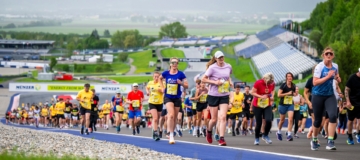
Wings for Life World Run 2026: Dein Ort wird zur internationalen Laufbühne!

Jeden Mai läuft die Welt – und dein Ort kann dabei im Mittelpunkt stehen! Ob Kleinstadt, Dorf oder Metropole: Mit der Wings for Life World Run App wird jeder Platz zur internationalen Laufstrecke und deine Veranstaltung zum App Run Event. Du kannst das Event direkt vor deiner Haustür organisieren und starten – egal, ob ihr zu zweit, zu zehnt, mit dem halben Ort oder einem ganzen SPORTUNION-Verein läuft.

Karate SPORTUNION Bundesmeisterschaft

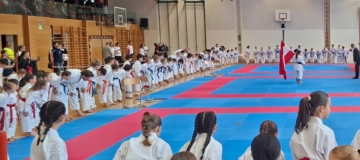
Viele tolle Kämpfe in St. Johann in Tirol Am 11. April 2026 wurde in St. Johann in Tirol die diesjährige Karate Sportunion Bundesmeisterschaft ausgetragen. Bereits zum vierten Mal zeichnete sich das Karate Leistungszentrum St. Johann in Tirol für die Organisation dieses hochkarätigen Turniers verantwortlich. Unter der Leitung von Predrag Juric und Deni Juric wurde die